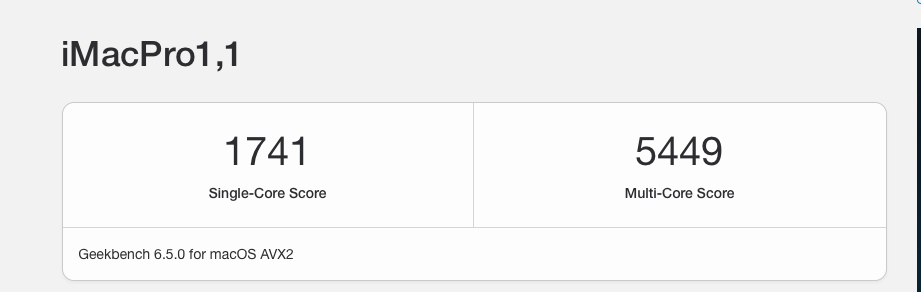
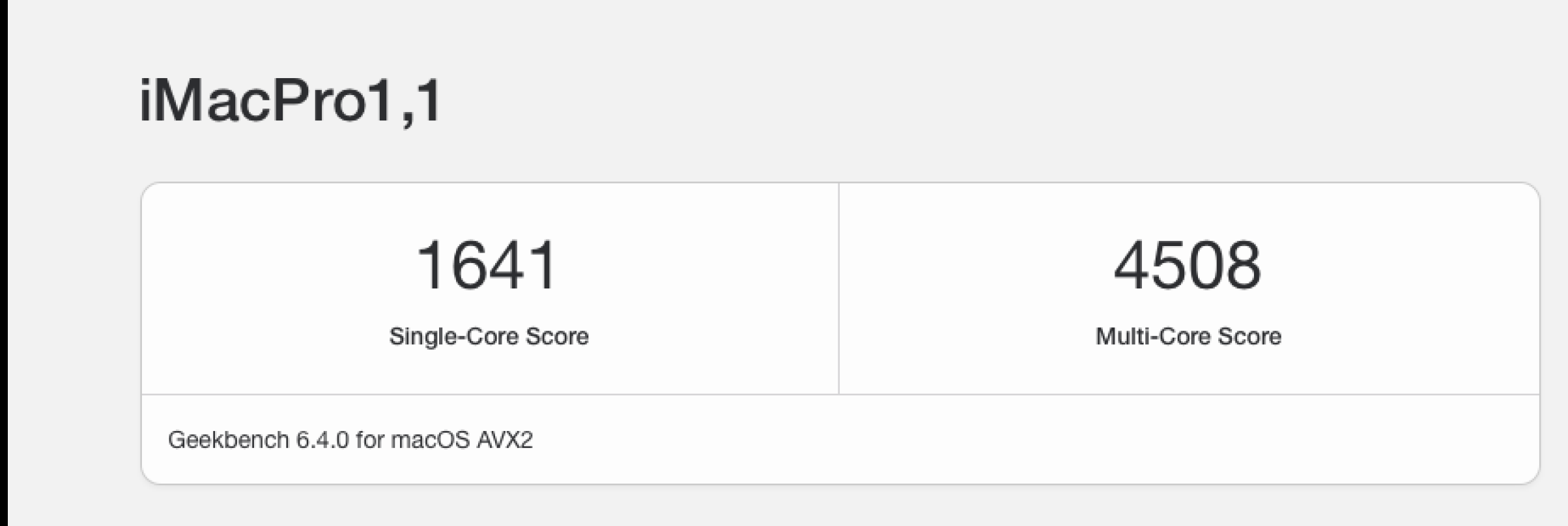
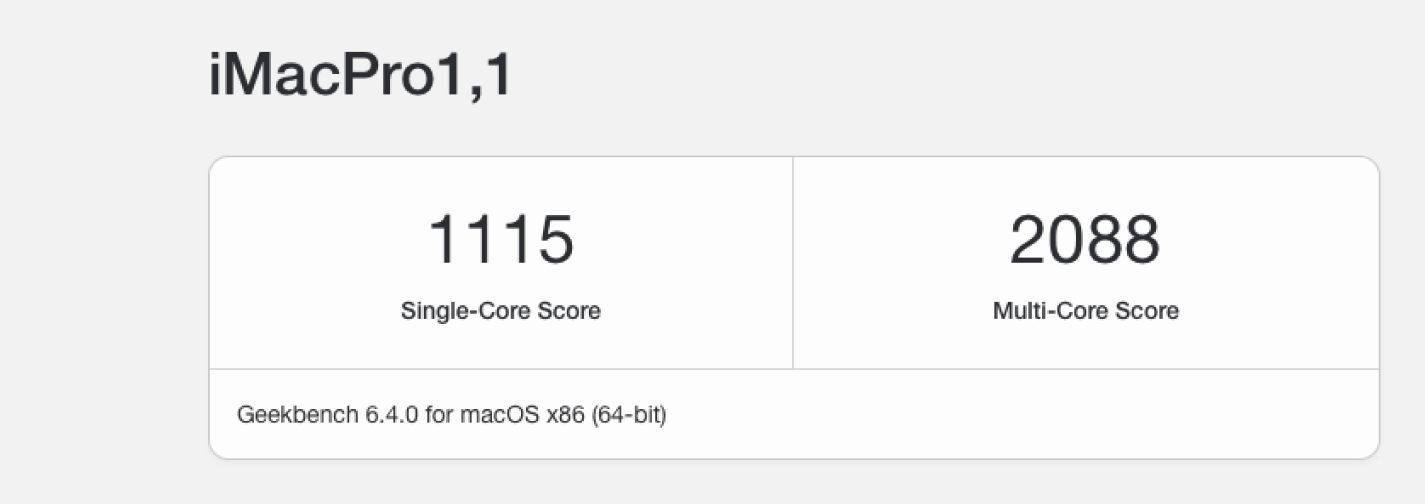
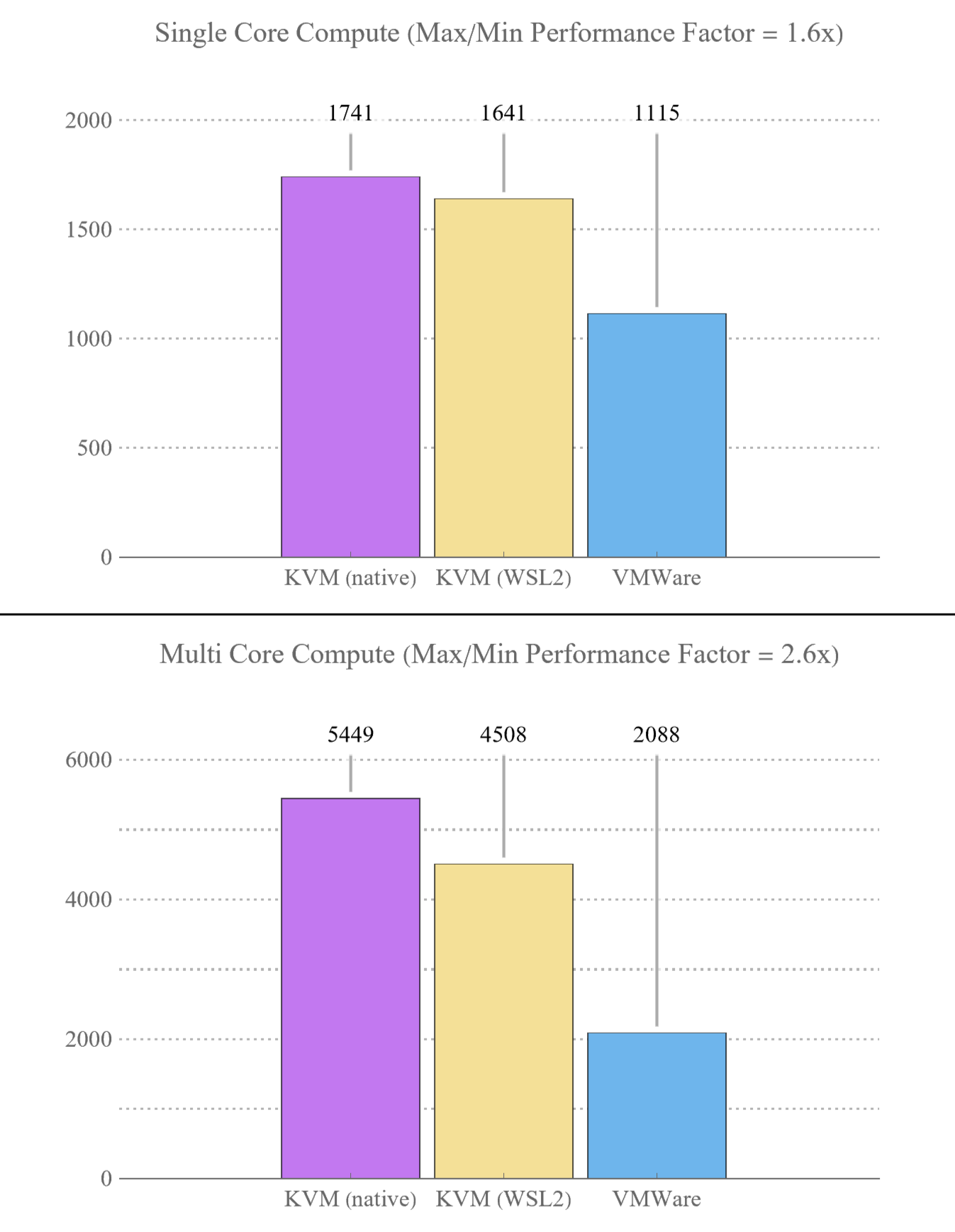
I just ran the VM from my prior post on native KVM, and found it was a bit faster than through WSL2 but only really on multicore CPU tasks. On singlecore it is 6.1% faster and on multicore it is 21% faster. Actually, all-in-all I am a bit impressed that Windows WSL2 can run KVM only this much slower than native KVM. But as I found out last year, the real problem with WSL is how slow I/O is when transferring files cross-filesystem, a problem Microsoft has known for a long time.
I think this type of Geekbench score is valid because the OS running Geekbench (MacOS Sonoma) is identical between the two VMs. I threw in the VMWare result from the prior post also though that configuration differs since there is no AVX2 and using a different MacOS version.
| metric | KVM Native | KVM-QEMU | VMWare |
|---|---|---|---|
| Host OS | ArchLinux 6.18.arch1-1 | Windows 11 (WSL2, archlinux) | Windows 11 |
| Hypervisor | KVM 6.18-QEMU 10.0.0-1 | KVM 5.15.167-QEMU 10.0.0-1 thru WSL2 | VMWare Workstation Pro 17.6.3 |
| Guest OS | Sonoma 14.7.6 | Sonoma 14.7.6 | Monterey 12.0.1 |
| Guest CPU | 1 socket, 2vCPU core, AVX2 | 1 socket, 2vCPU core, AVX2 | 1 socket, 2 vCPU core, no AVX2 |
| Guest Memory | 8GB | 8GB | 8GB |
| Guest Disk (on host) | 80GB, NVME | 80GB, NVME | 80GB, NVME |
| Geekbench Single Core | 1741 | 1641 | 1115 |
| Geekbench Multi Core | 5449 | 4508 | 2088 |
| User interaction | VNC/SPICE | VNC/SPICE | VMWare Workstation Pro GUI |
Keep in mind I could not enable AVX2 instructions for my VMWare VM, so that explains why the Geekebench score is so much lower.